
Loading...
Serving Indio, CA and surrounding areas. (442) 215-3899
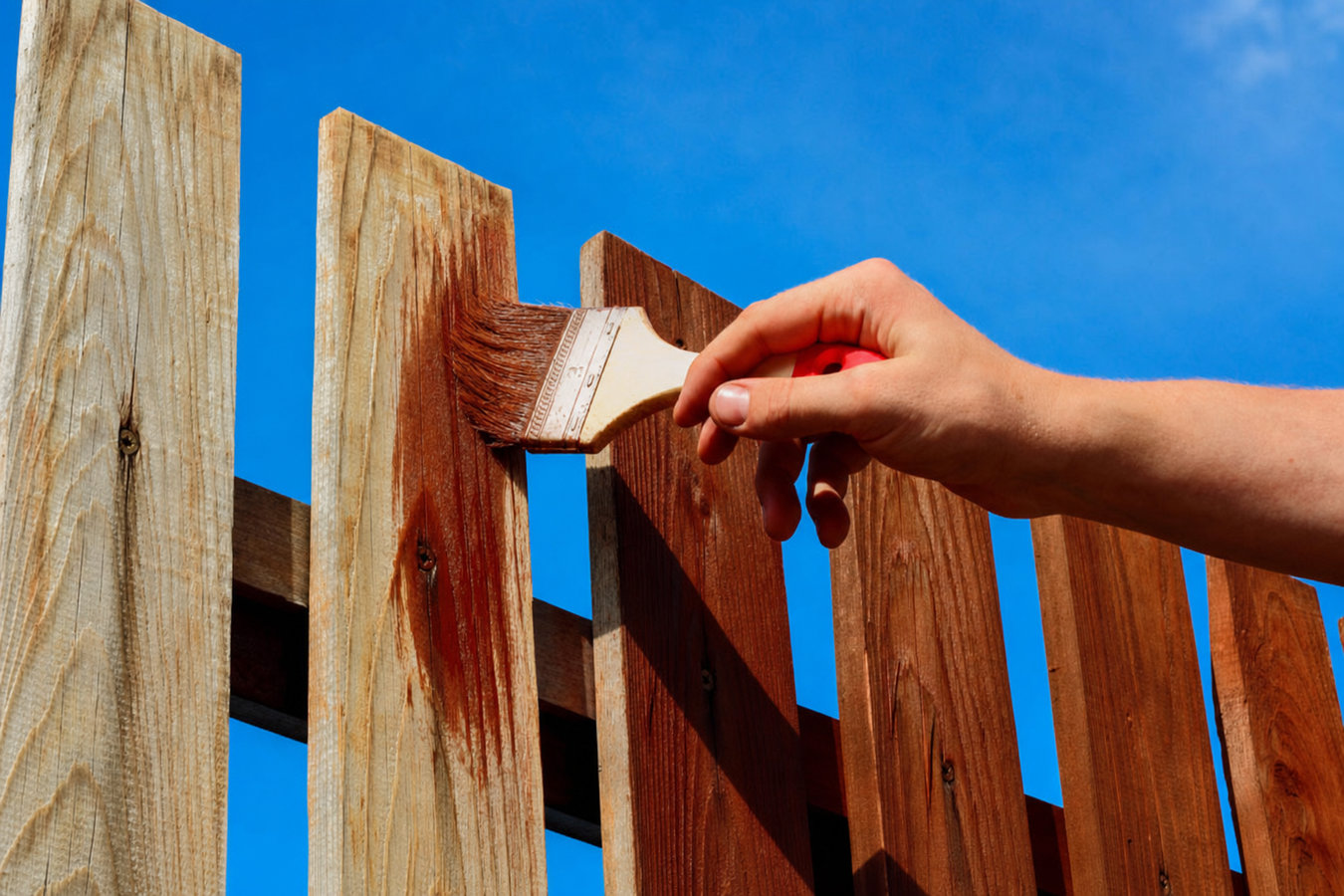
Indio's desert sun breaks down unprotected wood faster than almost anywhere in California. We clean, prep, and apply UV-resistant stain and sealer to keep your fence looking good and holding up through the heat.
Fence staining and sealing in Indio, CA means cleaning the wood, stripping old finish, and applying a UV-resistant stain and sealer that slows down the drying, cracking, and graying that Coachella Valley heat causes. Most jobs on a typical residential fence take one to two days - the first for cleaning and prep, the second for application once the wood is fully dry. The desert here is harder on wood than most homeowners realize: Indio averages over 290 sunny days per year, and unprotected wood can start cracking within a single summer. Regular treatment on a two-to-three-year schedule is almost always less expensive than the fence replacement that follows when maintenance is skipped too long.
Staining soaks color and protective ingredients into the wood fibers, while sealing adds a clear or tinted layer that blocks moisture and UV rays. Together, they slow the natural process of wood drying out and turning gray. In Indio, the risk is not primarily rain - the city averages fewer than four inches of rain per year. The real threat is dry air and relentless sun that pull moisture out of wood constantly, causing it to shrink and crack even on calm days. A proper stain and seal job acts like a barrier against that, and catching the fence before visible damage sets in keeps the job simpler and less expensive.
When a wood fence loses its warm brown tone and fades to a flat gray, the sun and dry air have stripped away the natural oils in the wood. In Indio's intense desert sun, this can happen within a year or two of installation if the fence was never treated. Gray wood is not necessarily ruined - it can usually be cleaned and restored - but the longer you wait, the more prep work and cost are involved.
Flick a little water onto a fence board and watch what happens. If it soaks in within a few seconds and darkens the wood, the protective seal has worn through. In Indio's dry climate, this matters even without rain - morning dew, irrigation overspray, and the occasional desert storm are enough to cause damage when there is no barrier left on the surface.
Small surface cracks are a sign the wood is drying out faster than it should. In the Coachella Valley's heat, this process accelerates significantly - boards that look fine in spring can show visible cracking by late summer. Catching it at the cracking stage means staining and sealing can still protect the wood; waiting until boards are warped or broken usually means replacement instead.
Uneven fading - especially on the side of the fence facing south or west - means the finish has worn through in the areas that get the most direct sun. Patchy color is not just cosmetic; it means some sections of the fence are now unprotected while others still have coverage. Treating the whole fence at once, rather than spot-treating, gives you even protection and a consistent appearance.
Every fence staining project starts the same way - with a thorough cleaning and prep that determines how well and how long the finish holds. We pressure-wash the fence, apply a wood cleaner to strip dirt, mildew, and any old flaking product, and let the wood dry completely before anything goes on. Skipping that prep step is the most common reason a stain job fails within a year, and we do not skip it. The choice between product types - semi-transparent, solid-color, clear sealer, or a combination stain and sealer - depends on the current condition of your fence, your HOA's color guidelines, and how much of the natural wood grain you want visible.
For homeowners whose fence has gone past the point where staining and sealing can help, we can assess whether targeted fence replacement of boards or sections makes sense, or whether a full replacement is the more cost-effective path. For fences that are in good shape and just need their finish refreshed, we can often complete the job in a single day on a small to mid-sized property. Either way, the goal is the same: a fence that holds up through Indio's summers and looks the way it should when you pull into your driveway. For homeowners considering a brand new wood fence installation, staining and sealing early - before the first desert summer - makes a measurable difference in long-term durability.
Lets the natural wood grain show through while adding UV protection - a popular choice for homeowners who want visible wood texture.
Provides maximum UV and moisture protection while delivering a uniform color - preferred in HOA communities with strict color standards.
Preserves the current color of the fence while adding a moisture barrier - best for recently stained fences that just need the seal refreshed.
An all-in-one treatment that adds both color and moisture protection in a single application - efficient for fences in good condition that are due for routine maintenance.
Indio averages over 290 sunny days per year, and summer temperatures regularly exceed 110 degrees Fahrenheit. That combination of intense UV radiation and dry desert air breaks down exterior wood finishes faster than almost anywhere else in California. A stain job that would last four years in a coastal city might only last two years here - sometimes less on a fence with full south or west exposure. The low humidity compounds the problem: dry air pulls moisture out of wood constantly, causing it to shrink, crack, and splinter even on days when the sky is perfectly calm. Homeowners in areas like La Quinta and Palm Desert face the same desert conditions and benefit from the same proactive approach to wood fence maintenance.
A second local factor worth knowing: many of Indio's neighborhoods are governed by homeowners associations, and HOAs here routinely inspect fences and flag weathered or discolored ones as maintenance violations. In communities like Indian Palms and Terra Lago, an untreated fence that has gone gray or blotchy can result in a notice from the management company before you even realized there was a problem. Staying on a regular staining schedule keeps your fence looking sharp, keeps you ahead of any HOA inspections, and protects your investment in a climate that works against it every single day.
We will ask how long your fence is, what material it is, when it was last treated, and whether you have HOA color requirements. We respond within 1 business day. For staining work, a quick in-person look at the fence is usually all we need to give you an accurate written quote.
We inspect the fence in person, check the wood condition, and note anything that needs extra prep - like mildew, heavy buildup, or soft spots at the post bases. You get a written estimate that itemizes cleaning, prep, and application separately so you know exactly what you are paying for before we start.
The crew pressure-washes the fence and applies a wood-cleaning solution that removes dirt, mildew, and old flaking finish. This step is what makes the stain bond and last. In Indio's dry air, the fence typically dries enough for application within a few hours - the crew confirms the timing on-site based on conditions that day.
Once the fence is clean and dry, the crew applies the stain and sealer - working in sections to keep the application even. Before leaving, we walk the fence with you to check for any missed spots or drips. Most products are dry to the touch within a few hours in Indio's warm air, and fully cured within 24 to 48 hours.
Free estimate, written quote, no pressure. We respond within 1 business day.
(442) 215-3899Most stain and sealer products are formulated for average climates. Indio's sun is anything but average - over 290 sunny days per year with summer temperatures regularly above 110 degrees. We use products specifically rated for high-UV desert environments, which hold their protective bond longer under Coachella Valley conditions than standard formulas do. USDA Forest Products Laboratory wood durability research confirms that surface finish is one of the primary factors in outdoor wood longevity under high UV exposure.
Alkaline soil and irrigation overspray in the Coachella Valley can cause fence posts to rot quietly at the base while the rest of the fence looks fine. We inspect the base of every post during the prep phase and flag any soft or damaged wood before we stain. Catching that early is far less expensive than discovering a failing post after the new finish has already been applied.
A large share of Indio's neighborhoods are governed by HOAs with specific rules about fence finishes and colors. We ask about your HOA requirements before every job and work within approved palettes - so you are not dealing with a violation notice after a brand-new finish. If your community requires an architectural review submission, we can advise on how to approach that process before work begins.
A fence that has not been treated in several years needs more prep work than one that is on a regular schedule - more cleaning, possibly light sanding. We assess that upfront and itemize it in your written estimate: cleaning, prep, and application as separate line items. You know exactly what you are paying for before we start, and the final invoice matches the quote.
Every staining and sealing job we do is backed by the same approach: thorough prep, the right product for desert conditions, and a walkthrough before we leave. Those details are what separate a job that holds up for two or three years from one that starts peeling within a season.
When staining and sealing can no longer save a fence that has dried out, cracked through, or lost structural integrity, a full replacement is the next step.
Learn MoreA freshly installed wood fence benefits most from staining and sealing early - before the first Indio summer strips away the natural oils.
Learn MoreIndio's intense sun starts working on unprotected wood every single day - the sooner you treat your fence, the less damage there is to reverse.